Design Legends. Muriel Cooper
Pioneer of interactivity and systems thinking. (1925–1994)
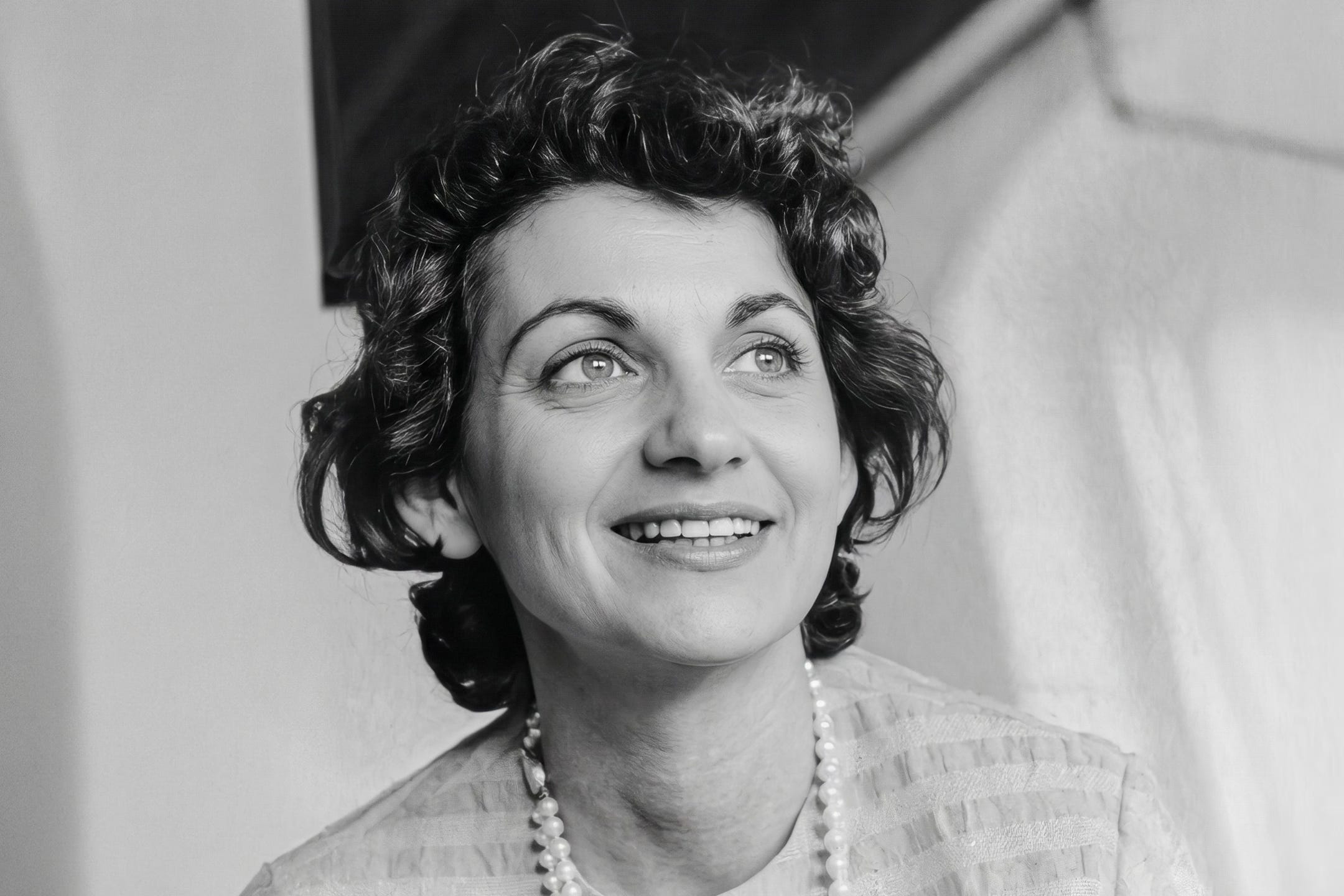

A brilliant designer and researcher, she was one of the first to recognize the potential of digital technology for creating living, dynamic systems. Her career began in the 1950s as a print designer and Art Director at MIT Press. Her most iconic work from that era remains the publisher’s logo—seven vertical bars that stand as a masterclass in abstraction and minimalism, looking just as modern today as it did half a century ago.
In 1969, she designed the monumental volume The Bauhaus, which became a definitive guide to the Swiss school. Yet, working on such a massive, static book was exactly what led her to realize the limitations of paper. She began searching for ways to translate the principles of systems design to computer screens. In 1975, she founded the Visible Language Workshop at MIT, working at the intersection of typography, interfaces, and programming—the very foundation of today’s digital world.
Under her leadership, concepts that are now industry standards were born. Long before the rise of VR or sophisticated animation tools, she experimented with dynamic 3D typography and reactive interfaces. At a 1994 TED conference, she presented Information Landscapes—vast arrays of data floating in three-dimensional space, through which a user could literally “fly” while interacting with text. This was a massive breakthrough in what we now call motion design.
While she didn’t leave behind hundreds of mass-produced products, her true legacy lies in her approach. She taught designers to see the computer not as a fancy typewriter, but as a fluid environment capable of responding to both content and user action.