

Design Legends. Eero Saarinen
Master of expressive functionality. (1910–1961)
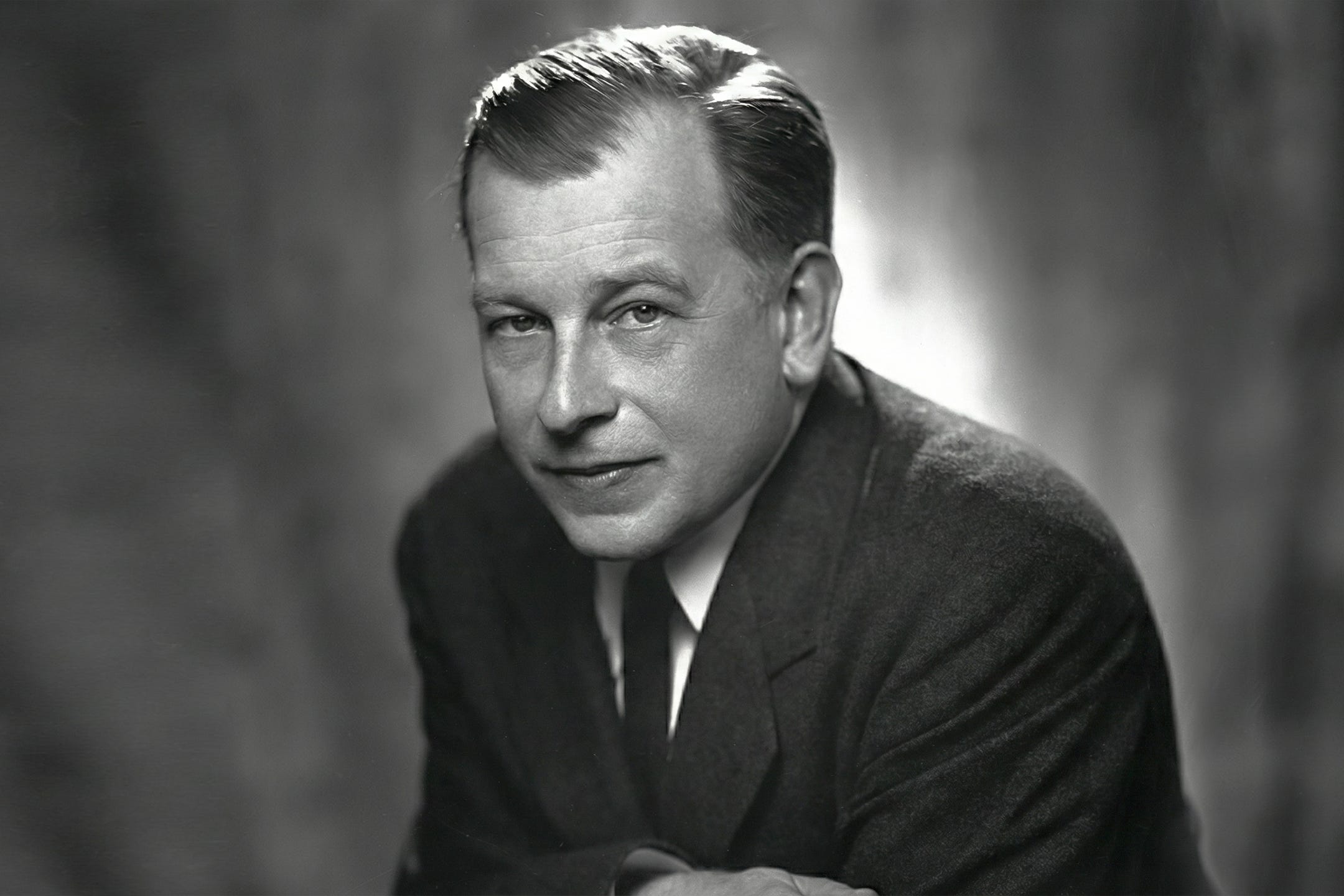

A world-renowned architect and designer who breathed organic life into the rigid geometry of Modernism. He grew up at the Cranbrook Academy of Art, where his father, Eliel, served as president. At the time, the academy was a true hotbed of talent, where Saarinen’s path crossed with the likes of Charles and Ray Eames and Florence Knoll. He gained his first serious furniture design experience under Norman Bel Geddes1, where he perfected his work with streamlined forms and developed the habit of creating hundreds of models in search of the one perfect curve.
One of Saarinen’s great professional obsessions was his “war on legs”. He genuinely hated the visual chaos created by the forest of supports under tables and chairs, famously calling the space “slums”. The result of this struggle was the Pedestalseries and the futuristic Tulip chair on a single, elegant base. This piece became such a powerful symbol of the future that it spent decades appearing in the interiors of iconic films—from Star Trek and Men in Black to Andrei Tarkovsky’s Solaris.
Equally important was his response to Florence Knoll’s request for a chair she could “curl up in like a basket full of pillows”. This led to the Womb chair with its protective, enveloping shape. Saarinen’s architectural masterpieces, such as the TWA Terminal in New York or the Gateway Arch in St. Louis, are essentially the same furniture design, just on the scale of buildings. He believed that any form should be unified and continuous. Passing away at the peak of his career, Saarinen left behind a new language of expressive functionality that still looks modern today.





Norman Bel Geddes (1893–1958) was an American industrial and theatrical designer who pioneered the streamlining aesthetic, famously envisioning the future of urban infrastructure through his “Futurama” exhibit at the 1939 New York World’s Fair and applying aerodynamic principles to everything from stage sets to household appliances. → Read more on Wikipedia