

Calligraphy
The ancient art of the handwritten word.
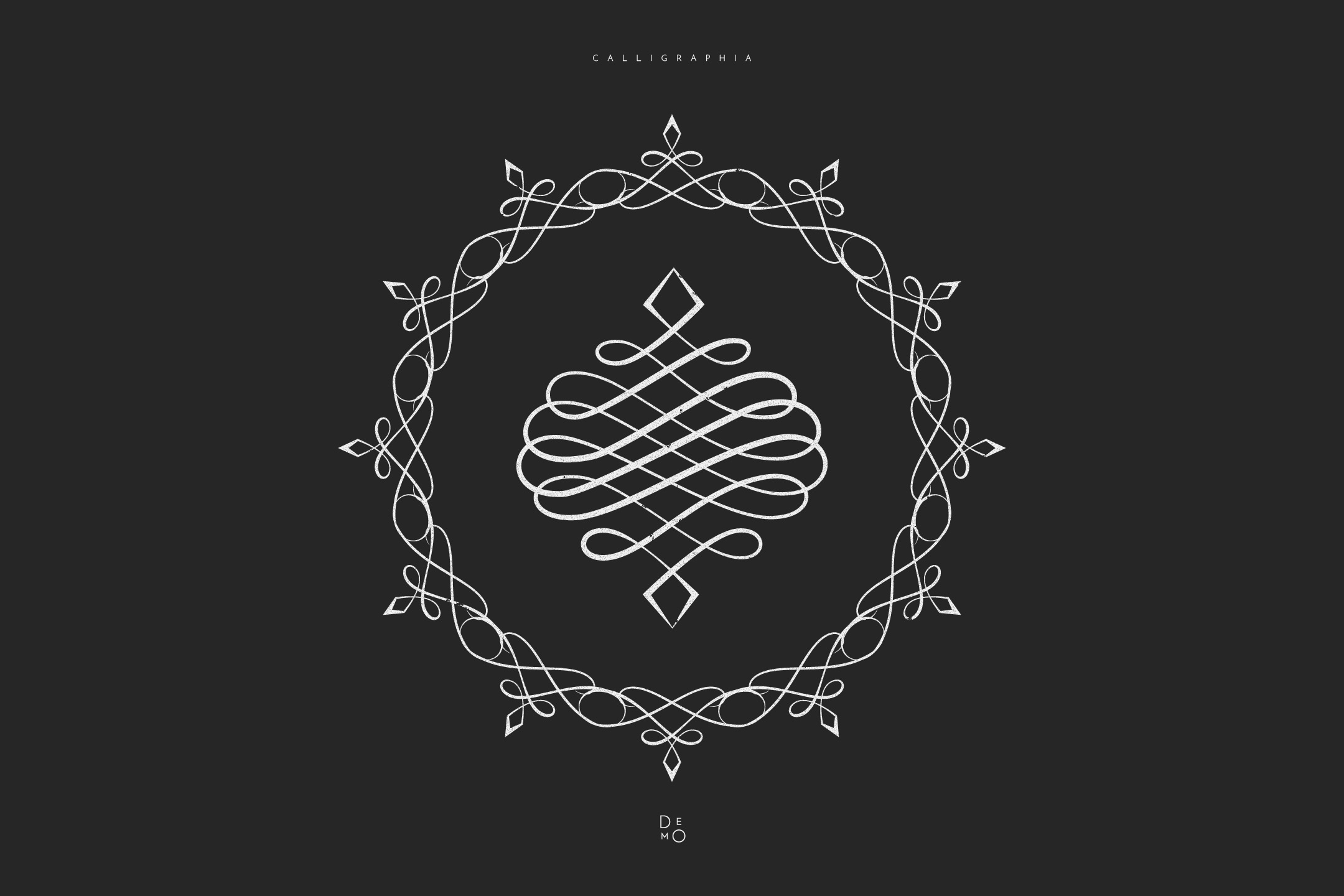

Beyond mechanized typefaces, text can also find form in calligraphy—the art of fine writing where letters are born from a single, fluid motion of the hand. It is a choreography of gesture captured in space, heavily reliant on rhythm, dynamic tension, and a deep conversation with historical styles. Interestingly, when Johannes Gutenberg built his printing press, he was not trying to engineer a new visual language. Instead, he meticulously counterfeited handwritten Gothic Textura1, ensuring his printed pages looked identical to traditional, scribal manuscripts.
The aesthetic of any script is dictated by its tool—be it a brush, a marker, or a quill, each determining the behavior of the stroke and the absorption of the pigment. When it comes to the physical mechanics of metallic nibs, designers must distinguish between two fundamental approaches:
Broad-edge nibs (Carolingian minuscule2, Gothic)—stroke contrast depends entirely on keeping the tool at a fixed angle relative to the baseline.
Pointed nibs (the Baroque era, English Copperplate3)—stroke thickness is modulated exclusively by how hard the master presses the tool down.
Today, calligraphy is no longer used to transcribe long texts—the process is simply too labor-intensive. Instead, it thrives in branding, editorial design, and packaging, where projects demand a unique, living gesture. In an era of perfect Bézier curves and sterile vector shapes, a calligraphic line becomes precious because of its hidden “flaws”: the natural tremor of a hand, a subtle asymmetry, or an unexpected ink pool. We subconsciously read these nuances as markers of authenticity, making it fair to say that calligraphy has transformed into the luxury of an intentional slowdown.






Gothic Textura, also known as Textualis or Gothic book hand, is the most formal, structured, and calligraphic form of the Blackletter script family. Emerging in Western Europe during the 12th century, it became the dominant book hand across the continent by the 14th century. → Read more on Wikipedia
Carolingian minuscule is a standardized, highly legible script developed in Western Europe during the late 8th century that became the primary ancestor of modern lowercase Roman typography. → Read more on Wikipedia
English Copperplate, historically known as English Roundhand, is a highly elegant style of calligraphic writing characterized by its distinct 55-degree slant, flowing cursive lines, and dramatic contrast between thin hairlines and thick downstrokes. → Read more on Wikipedia